
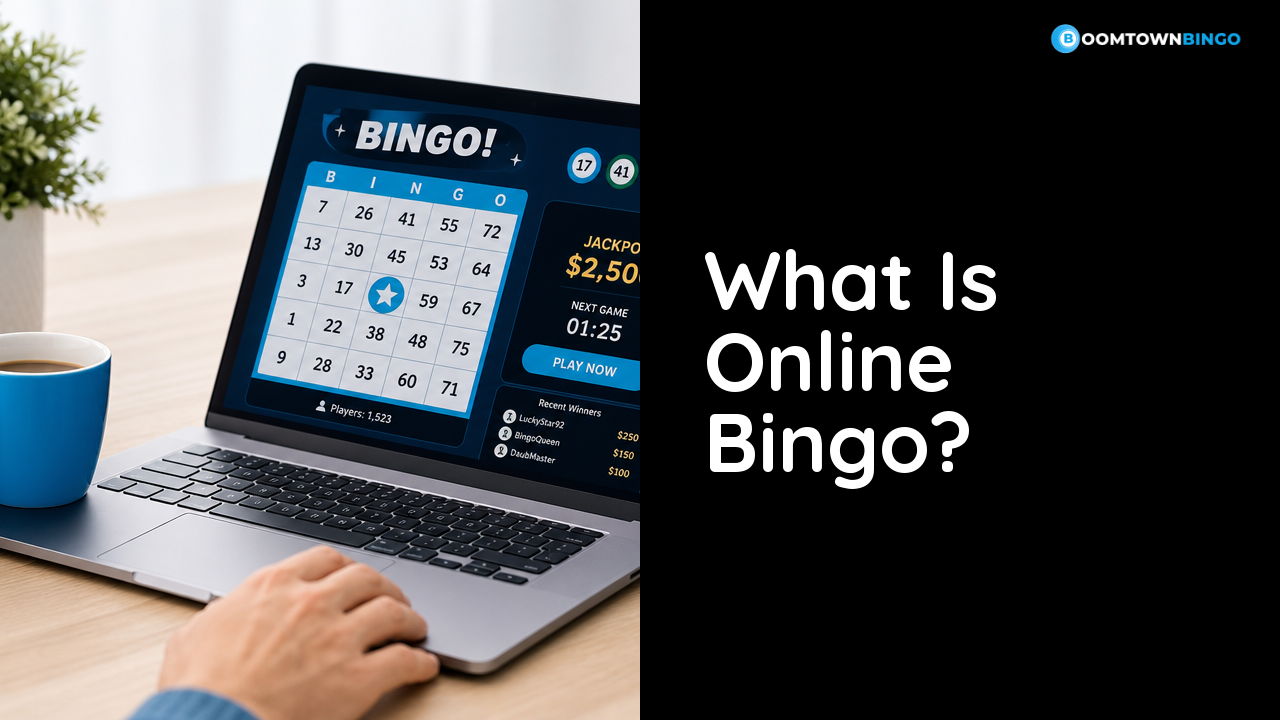
What Is Online Bingo?
Online bingo is the digital form of a number draw game where players buy tickets, join scheduled rooms, and mark off numbers as random calls are made through software. In the UK, any site taking real-money stakes operates under Gambling Commission rules, and that shapes everything from how you register to how quickly you can withdraw winnings. The mechanics are familiar. What decides whether a site fits a particular player is the surrounding product: ticket pricing, room schedules, prize structures, payment friction, and account checks.
Most newcomers underestimate how much the format choice and the account setup matter compared with the draw itself. The number calling is automated. The decisions that shape your experience happen before and after the game.
How Online Bingo Actually Works
When a room opens, the software assigns numbered tickets to every entered player, then a random number generator calls numbers at a set pace until a ticket meets the winning pattern. The system checks the result automatically and credits the prize to the winning account, usually within seconds of the final call.
The pace and rhythm change depending on the room. A standard 90-ball room with a full house, two-line, and one-line structure can run for several minutes. A speed bingo room may finish in under a minute. Some rooms run back-to-back on a tight schedule, while others sit on a fixed hourly slot tied to a promotion or jackpot event.
Tickets, Patterns and Auto Daub
Tickets show a grid of numbers depending on the format. As numbers are called, you can either mark them yourself or let auto-daub handle it. Most UK players leave auto-daub on, partly because juggling multiple tickets manually is impractical, and partly because the chat window is often where the social value sits. Manual play tends to appeal more to players who like the rhythm of marking, or who only buy one or two tickets at a time.
Winning patterns range from a single line, to two lines, to a full house. On 75-ball games, the pattern might be a shape such as a cross, an arrow, or a corner combination. The pattern is always stated before you buy in, and the prize value next to it tells you what each stage pays.
Result Confirmation and Prize Crediting
Licensed operators verify the winning ticket through the game engine before any payout lands in your balance. This happens fast enough that you rarely notice the check, but it matters: it is the regulated step that keeps results auditable. If a dispute arises, the operator can reproduce the call sequence and the ticket state at the moment the win was claimed.
The Main Online Bingo Formats
UK sites tend to revolve around four core formats plus themed variants. The format choice changes session length, prize stages, and the cognitive load of tracking tickets.
| Format | Card Layout | Typical Prize Structure | Best Suited To |
|---|---|---|---|
| 90-ball | 9×3 grid, 15 numbers | One line, two lines, full house | Traditional UK players, longer sessions |
| 75-ball | 5×5 grid, 24 numbers plus free centre | Pattern wins | Players who like variety in winning shapes |
| 80-ball | 4×4 grid, 16 numbers | Lines, corners, or full card | Mid-pace players wanting shorter rounds |
| Speed bingo | Reduced numbers or faster calls | Usually single full house | Short attention windows, mobile play |
90-ball remains the default UK format. It carries the familiar three-prize structure that mirrors the bingo hall tradition, which is why it appears as the headline product on almost every UK-facing operator.
75-ball formats lean American in origin but are common in themed and branded rooms, especially where a slot tie-in is involved. The pattern variability tends to keep players engaged across more games in a sitting.
80-ball sits in the middle, and you will often find it inside white-label platforms that share the same back-end across multiple brand sites.
Speed bingo and themed rooms tend to exist as promotional vehicles. They are useful when you want to clear bonus wagering quickly or join a community event, less so as a steady format.
What Tickets Actually Cost and How Prizes Are Paid
Ticket prices in UK rooms commonly start at 1p to 10p for casual rooms, with featured rooms or jackpot rooms running higher. Free bingo rooms exist, but they are usually gated behind a recent deposit, a loyalty tier, or a promotional window.
Prize formats fall into three categories that behave very differently:
- Fixed prizes pay the same amount regardless of how many players join. Good for predictable value, less appealing in busy rooms because more entries dilute your odds against a flat payout.
- Shared prizes scale with the room size, but split between multiple winners when more than one ticket completes on the same call. This is more common than beginners expect, and it explains why advertised prize values sometimes look larger than what hits the balance.
- Progressive jackpots grow from contributing ticket sales and pay out when a player completes the required pattern within a stated number of calls, often a tight threshold such as a full house in 40 calls or fewer.
Understanding which prize type applies before you buy in is one of the more useful habits a new player can build. Operators state the prize type in the room information panel, but it is easy to miss when the lobby is busy.
Bonuses, Wagering Rules and Where Players Get Caught Out
Welcome offers in UK bingo usually combine bonus funds with free tickets, sometimes with free spins on slots attached. The headline number is rarely the figure that matters. What matters is the wagering requirement, the game weighting, the maximum bet allowed while a bonus is active, and the cap on winnings withdrawable from bonus play.
A few recurring friction points are worth flagging:
Bonus funds often cannot be withdrawn until the wagering requirement is fully cleared, and bingo tickets sometimes contribute at a different rate than slot spins. A 4x wagering bonus on a bingo deposit can be more practical than a 30x wagering bonus on a casino-style promotion, even if the headline value of the second offer looks larger.
Expiry windows can be short. Seven days is common, and unused bonus funds usually disappear at the end of that window. If you only play twice a week, a seven-day bonus is effectively a two-session product.
Maximum cashout limits cap what you can withdraw from bonus winnings, regardless of how well a session goes. This catches new players who treat the bonus value as equivalent to real cash.
Sites, Apps and the Account Side of the Product
Browser play and app play differ less in the game lobby than in the account experience. The app usually offers smoother room navigation, saved login, and push alerts for room starts or promotions. Browser play avoids the install but tends to ask you to re-authenticate more often, which becomes a friction point during a quick session.
The account area is where most of the practical decisions get made, and it pays to treat it as part of the product rather than an afterthought.
Identity Verification and KYC
UK-licensed sites must verify identity, and most now ask for ID, address, and sometimes payment confirmation before the first withdrawal, occasionally before the first deposit. The system usually accepts a passport or driving licence scan plus a recent utility bill or bank statement. Where it goes wrong is on document quality, mismatched names, or out-of-date addresses. A poorly cropped photo can hold a withdrawal for several days.
This is the stage that decides whether a site feels usable or frustrating, and it is rarely covered in operator marketing.
Payment Methods and Withdrawal Reality
Debit cards remain the dominant deposit method for UK bingo. PayPal availability varies by operator and is often a draw for players who prefer to keep gambling spend separate from the main bank account. Bank transfer withdrawals can take two to five working days depending on the operator’s processing window and any pending checks. E-wallet withdrawals are usually faster once verification is complete.
Operators with a 24-hour pending period before a withdrawal is processed give players a window to cancel and replay the funds. For some players this is convenient. For others, it is the strongest argument for choosing a site that processes faster.
How to Choose a Bingo Site Without Regretting It Later
UK Gambling Commission licensing is the first filter, not a tiebreaker. An unlicensed site offering the UK market without permission falls outside the consumer protections that licensed operators must provide, including dispute resolution, fund segregation requirements, and safer gambling controls.
Beyond licensing, the practical filters are these:
- The formats and room schedules need to fit when you actually play. A site with strong evening rooms is useless if your sessions happen at lunch.
- The ticket price range should cover both your casual play and any room you would step up to occasionally. Sites that only run high-stake jackpot rooms quickly become uncomfortable for low-stake players.
- Withdrawal speed matters more than deposit speed. Read recent player reports rather than the operator’s own stated timescales.
- Chat room culture varies widely. Some sites lean older and quieter, others run active chat games and host-led events. This is hard to assess without trying a room.
- Many UK bingo brands share the same white-label back-end, so two sites that look different on the surface may run identical lobbies, identical promotions, and identical withdrawal teams. If you have had a poor experience on one, check whether others on the same platform will repeat it.
Mobile usability is often the deciding factor for daily players. Loading speed, the visibility of auto-daub markers on smaller screens, and how easy it is to switch between rooms mid-session all matter more than the marketing screens suggest.
Safer Gambling Tools You Should Actually Use
UK licensed operators must offer deposit limits, time-out periods, reality checks, and self-exclusion options. These tools work better when set before they feel necessary, not after.
Deposit limits applied at account opening prevent the slow drift that affects players who treat each deposit as a separate decision. Reality check pop-ups every 30 or 60 minutes help break the time blindness that bingo sessions can produce, especially when auto-daub removes the active mental load of marking tickets.
GAMSTOP, the UK self-exclusion scheme, blocks access across all UK-licensed operators in one action. It is a stronger tool than per-site exclusion and worth knowing about even if you never need it. Real-money bingo carries financial risk, and the responsible gambling controls exist because that risk is real.
Common Bingo Terms Worth Knowing
A short vocabulary covers most of what you will see in rooms and promotions:
A strip is a set of six tickets in 90-ball play, containing every number from 1 to 90 across the strip. A session is a sequence of games in a single room or event. Roll-on or roll-up wins describe prizes that carry over to the next call if not won within a set number of calls. A chat host moderates the room and often runs side games with small prizes funded by the operator. CM in chat usually means the chat moderator, and TY simply means thank you. Bingo chat shorthand develops fast, and it is part of why long-standing players tend to stay loyal to one or two communities.
Frequently Asked Questions
How much should a beginner deposit on a first bingo session?
A modest amount that matches what you would spend on a single evening of entertainment. Many UK players begin with £10 to £20, which covers a reasonable number of low-stake tickets and gives room to try two or three different formats. Set a deposit limit at the same value when you open the account to remove the temptation to top up mid-session.
What is the difference between bingo on a licensed UK site and an unlicensed offshore site?
A UK Gambling Commission licence requires the operator to verify player age and identity, segregate player funds, run tested random number systems, offer the standard safer gambling tools, and submit to UK dispute resolution. Unlicensed offshore sites accepting UK players do none of this under UK law, so a player with a withdrawal problem or a disputed result has far fewer routes to a resolution. The visible game might look similar, but the protections behind it are not comparable.
Why do some bingo sites look almost identical to each other?
Many UK bingo brands run on shared white-label platforms supplied by a small number of operators such as Dragonfish, Jumpman, and Pragmatic Solutions. Sites on the same platform share lobbies, room schedules, prize pools, and often the same back-office team. The branding, theming, and welcome offer differ, but the core product is the same. Picking between two such sites is often a question of brand preference and promotion rather than gameplay.